

Frequent and essential01
High-Tech Enterprise Certification
Organize R&D projects, commercialization evidence, personnel systems, intellectual property and financial criteria into a material gap list and evidence chain.

AI SHUPAI · TANGSHAN SHUPAI INFORMATION TECHNOLOGY
Starting with enterprise files, we connect products, services and research.
Bring AI into business, with a clear path from work to delivery.
Application criteria, deadlines and attachments are governed by the original official notice. Notices are published in Chinese.
ABOUT SHUPAI
ShuPai provides enterprise AI and digital transformation for businesses, industrial parks and industry service organizations. Starting with technology projects, intellectual property, policy applications and technology contracts, we organize documents, rules and workflows into manageable, reusable digital assets.
AI does not replace the enterprise’s final judgment. With explicit authorization and rules, it assists with retrieval, organization, drafts, completeness checks and validation. Responsible personnel still confirm key facts, professional opinions and external submissions.
Meet ShuPaiPRODUCTS & SOLUTIONS
Inventory documents and permissions, establish maintainable asset inventories and knowledge bases with sources and versions, then connect business execution, human review and delivery registers.
Explore the platform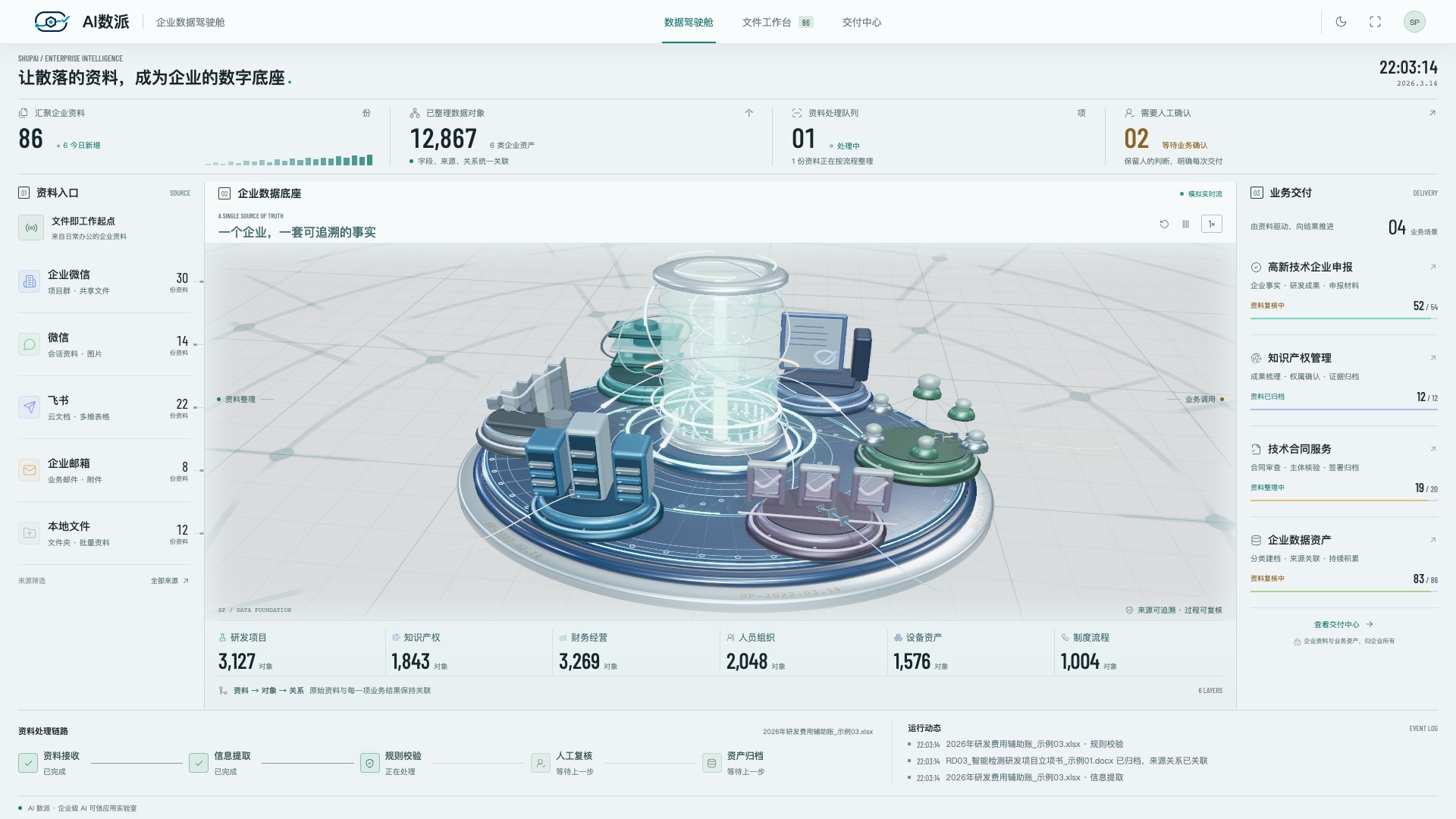 Data asset showcase ↗
Organize R&D projects, commercialization evidence, personnel systems, intellectual property and financial criteria into a material gap list and evidence chain.
Map core business, innovation capability and operating-quality data against evaluation criteria and maintain a long-term development ledger.
Connect patent discovery, technical-feature analysis and filing roadmaps to the R&D process, turning IP into a reusable operating asset.
Compare enterprise profiles with national, provincial, municipal and county policies, highlighting potentially relevant windows and eligibility conditions.
BUSINESS & GROWTH
ShuPai starts with document-intensive services that have defined workflows and clear accountability. Customer value lies in less rework, reviewable deliverables and traceable execution—not the number of AI agents used.
Business & productization pathMaintain enterprise documents, object relationships and sources so subsequent work can reuse them.
Embed domain checks, exception handling and acceptance requirements in workflows, with human confirmation at key steps.
Validate end-to-end delivery before reusing configurations, templates, rules and delivery mechanisms. This is ShuPai’s development path.
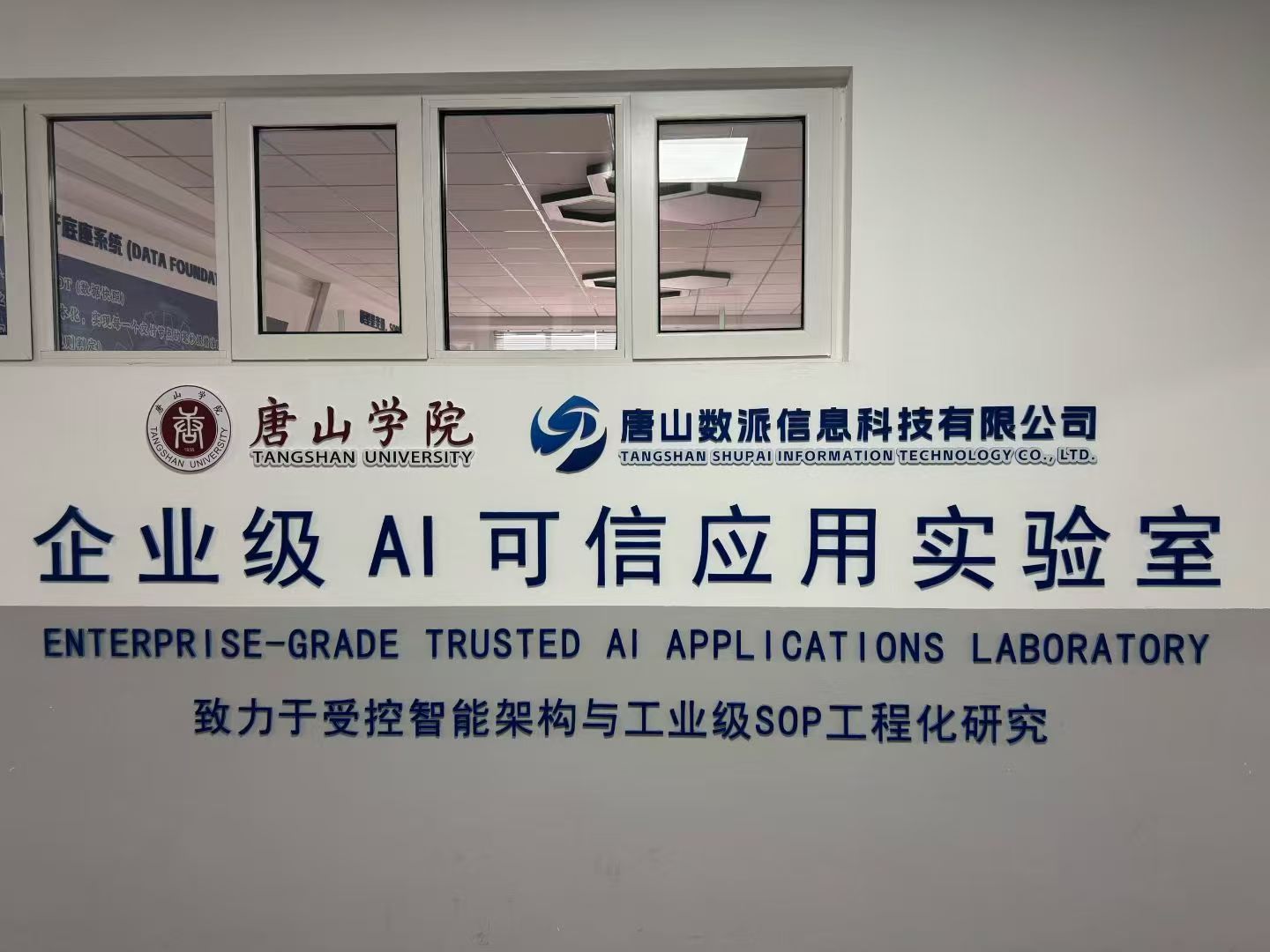
LAB & INNOVATION
Research and validation in enterprise knowledge engineering, controlled AI agents, workflow rules and traceable delivery. Existing settings, university collaboration and milestones are shown; operations and cooperation scope are subject to confirmed information.
EXPERIENCE
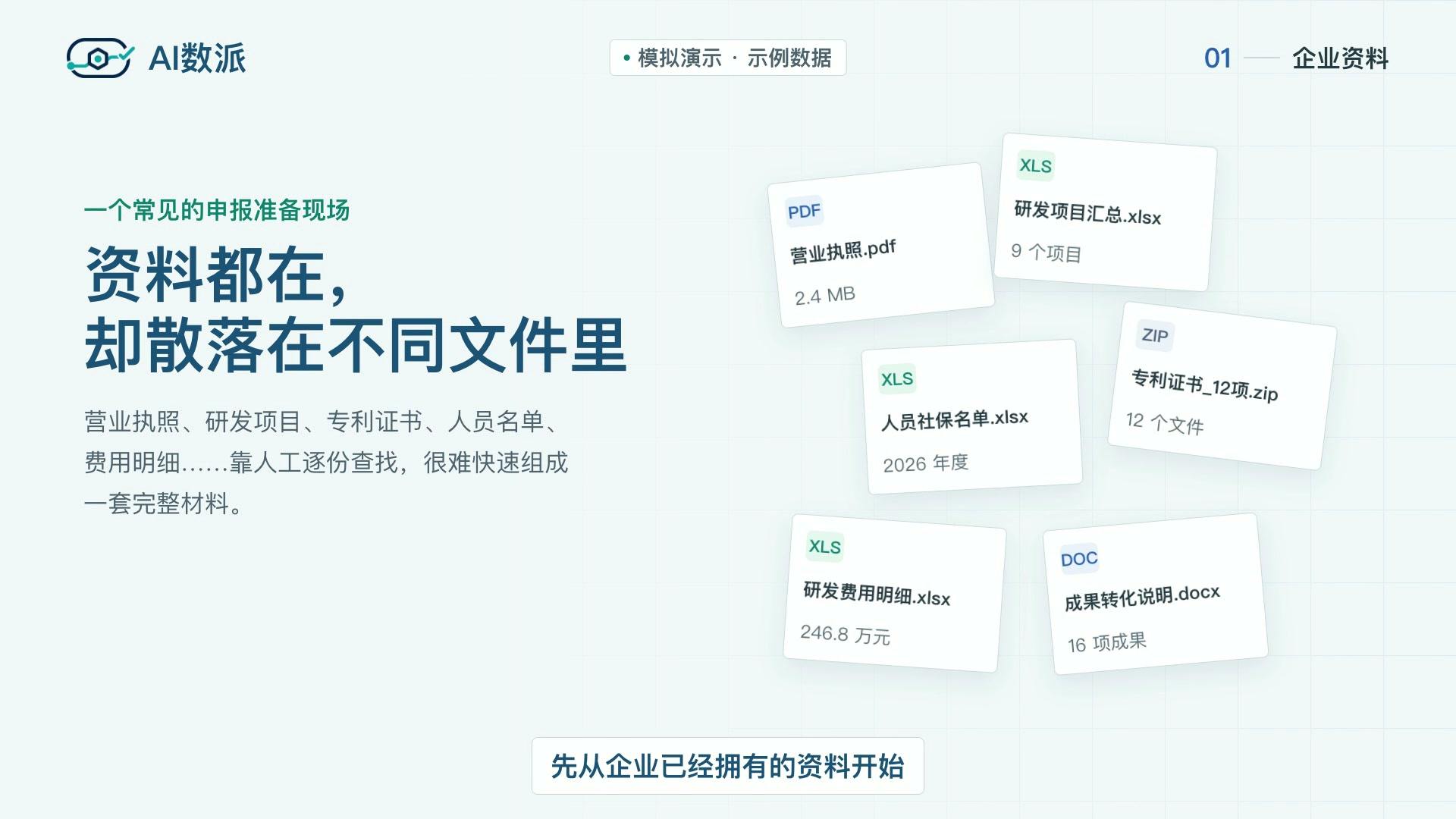 Process demo
FROM FILES TO REVIEW
Upload files, read information, organize materials, review and produce results. Explore the workflow through video and interactive demos.
LET’S CONNECT